The Voicemail Where Home-Service Jobs Go to Die
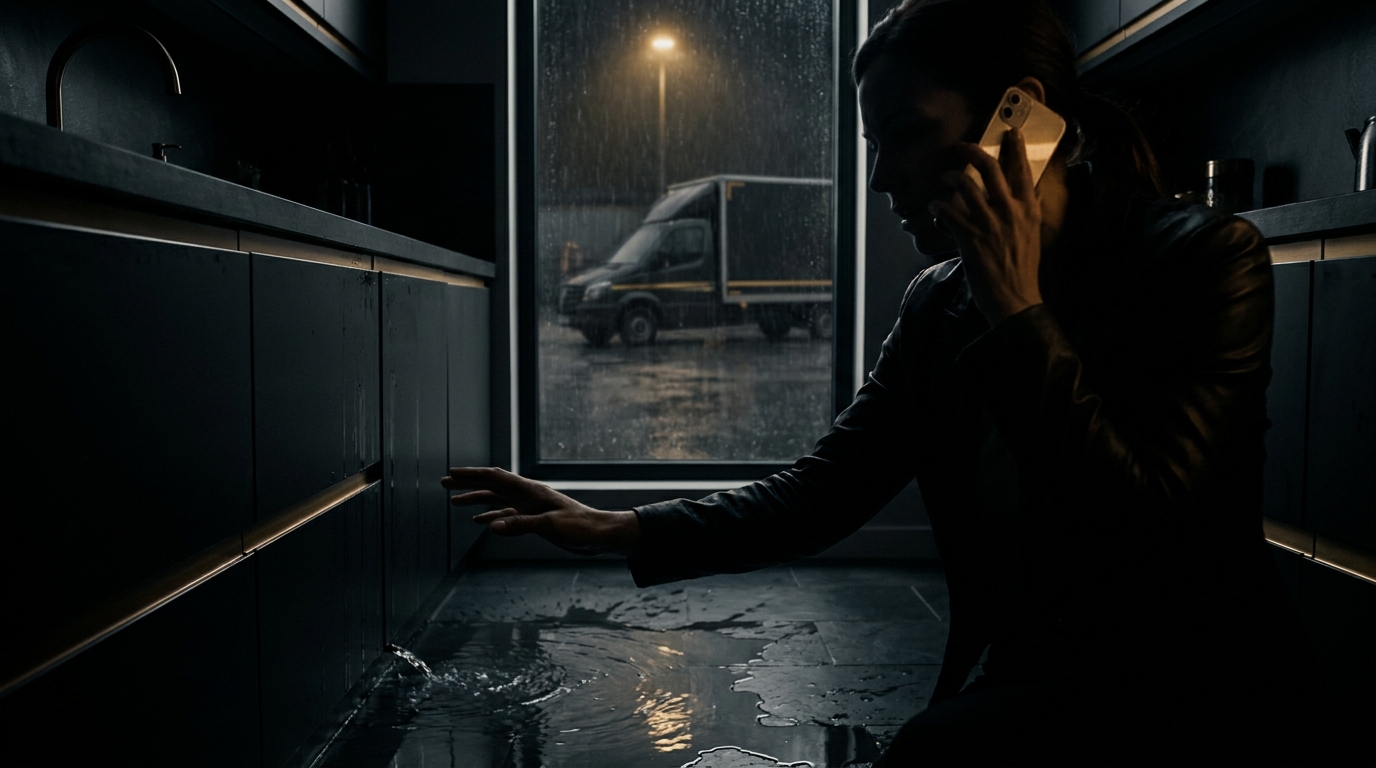
It's 9:14 on a Tuesday night and there's water coming up through the kitchen floor. The homeowner has a towel in one hand and a phone in the other, and she's doing the thing everyone does. Dialing down the search results. First plumber, four rings, voicemail. Second plumber, voicemail. Third one picks up on the second ring, says he can have a guy there by ten, and just like that the job is his. The first two never knew they were in the race. They were asleep, or on another call, or under a sink across town with the ringer off.
That's the whole business in one phone call. A home-service call isn't a lead. It's a job with a deadline, and the deadline is now.
The phone is the storefront, and it's usually closed
Here's the part that should keep contractors up at night. A home-service call books at roughly 30 to 40 percent when somebody answers it live, and the booking rate falls below 5 percent the second it rolls to voicemail (ServiceTitan). Same caller. Same burst pipe. Same money in their pocket. The only variable is whether a human voice was there to catch it.
And mostly, there isn't one. Home-service contractors miss an average of about 60 percent of their inbound calls when crews are out in the field (ServiceTitan Industry Report 2024). Think about what that number is actually describing. The better your guys are doing their jobs, the worse your phone is doing its job. Every truck that's out earning is a phone that's ringing into the void. Success and failure, wired to the same switch.
You'd think the voicemail would at least be a net. It isn't. Fewer than 3 percent of callers bother to leave one when they hit the beep (Invoca). Of course they don't. The lady with the flooding kitchen isn't going to recite her address to a robot and wait by the phone hoping somebody calls back before the drywall is ruined. She's already dialing the next guy. The beep is where the job goes to die, and almost nobody even attends the funeral.
The demand shows up exactly when you've gone home
The cruelty of the trades is that emergencies keep their own schedule, and it's never yours. The furnace quits on the coldest night. The drain backs up on Sunday morning before the in-laws arrive. The breaker pops at 11pm. Demand spikes after hours and on weekends, which is the precise window when the office is dark and the front desk has gone home for the day.
So the calls that are worth the most, the panicked ones, the ones where price is the last thing on anybody's mind, arrive when there's no one to answer them. You spend money getting the phone to ring. The trucks, the Google Ads, the wrap, the reviews you chase. Then the ring lands at 9pm and the storefront is locked. You paid for the customer to walk up to the door and find it closed.
You don't need a bigger team. You need a phone that never sleeps.
The fix isn't another receptionist, and it isn't asking your techs to answer between jobs while they're elbow-deep in a water heater. The fix is an always-on layer that picks up every call, day or night, sounds like a person, gathers the address and the problem and the urgency, and books the slot on the spot. No beep. No callback queue. No "we'll get back to you Monday."
When the phone answers, the job converts at 30 to 40 percent instead of dying under 5. That gap isn't a marketing problem or a branding problem. It's a math problem, and the math is brutal in your favor once you close it. Catch even half the calls you're missing and you haven't grown the business by a sliver. You've roughly rebuilt it, using leads you already paid for and were throwing on the floor.
The competitor who beat you to the flooded kitchen didn't have better plumbers. He had a phone that answered. That's it. He was awake when you weren't, or something on his end was, and awake wins every single time at 9pm on a Tuesday.
The job was never lost on price. It was lost at the beep.