The Empty Chair: What Patient No-Shows Really Cost
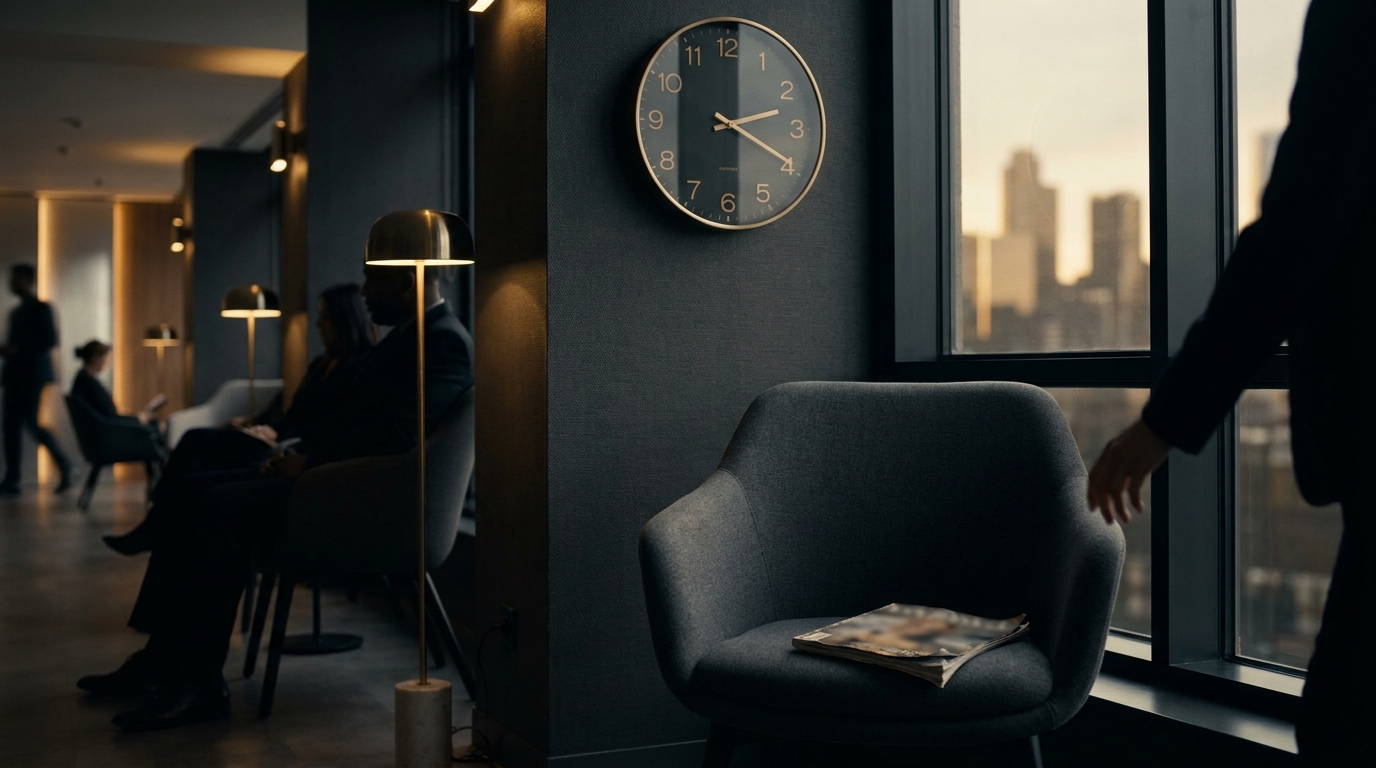
The waiting room is full. Eleven people, a stack of dog-eared magazines, a television muttering the weather. And one chair, by the window, that stays empty until the front desk gives up and crosses a name off the list at 2:47. Nobody else notices. The receptionist does. That chair was supposed to hold a 2:30, and the 2:30 is not coming, and the thirty minutes that belonged to the 2:30 are already gone.
That is the strange physics of the no-show. A missed appointment isn't a sale you lose and recover next week. It's a unit of time that expired. You cannot warehouse a Tuesday afternoon and sell it Thursday. The slot is perishable, and once it's empty, it's empty for good.
A number bigger than it looks
How often does the chair stay empty? More than people guess. The national average patient no-show rate sits around 18%, with one frequently cited study reporting a mean of 18.8% across ten clinics (NCBI/PMC). Roughly one appointment in five. And that's just the average; reported rates run anywhere from about 5.5% to 50% depending on the specialty, the neighborhood, and how far out the appointment was booked (Curogram). A dermatology practice in an affluent suburb and a safety-net clinic across town are not living in the same statistic.
The dollar figure attached to each empty chair is just as easy to underestimate. Each individual no-show can cost a physician roughly $200 or more in lost revenue (Curogram). Two hundred dollars, evaporated, for a chair nobody sat in. Multiply that by a fifth of the schedule and the number stops being a rounding error and starts being a line item.
Then there's the figure everyone in healthcare has heard. No-shows are said to cost the US healthcare system around $150 billion a year. It's a staggering number, and it shows up everywhere, repeated by trade press and vendor blogs alike (HCI Innovation Group; Medical Transportation Access Coalition). Worth saying plainly: this one is a widely-quoted industry estimate, not a verified primary statistic the way the 18% rate and the $200 cost are. The honest version is that nobody can audit $150 billion to the dollar, but everyone agrees the true number is enormous. Treat it as the order of magnitude, not the decimal point.
It's mostly a communication failure
Here's the part that should bother administrators more than the dollars: most no-shows are not patients who decided medicine is a scam. They forgot. The appointment was booked six weeks ago, life happened, and the reminder either never came or came as a voicemail nobody checks. Something changed, and rescheduling meant calling a number, sitting on hold, and explaining yourself to a stranger, so they just didn't.
Strip the problem down and a no-show is usually a communication problem wearing a medical costume. The patient didn't remember. The patient couldn't easily move the appointment. The patient had no simple way to say "I can't make it" that didn't cost them twenty minutes on hold. Friction on the patient's side becomes an empty chair on the practice's side.
Which is precisely why the fix has so little to do with medicine. A reminder that actually reaches someone, in the channel they actually read, a day or two before. A reschedule link that takes ten seconds instead of a phone tree. A two-way text that lets a patient reply "can't make Thursday, what else have you got" at 11pm from their couch. None of that is clinical. All of it moves the number.
Why automation fits this problem so well
Reminders, rescheduling, two-way contact. Notice what those three things have in common: they're repetitive, time-sensitive, and identical across thousands of patients. That's the exact shape of work that automation handles better than a person can, not because the software is clever but because it never gets tired, never skips the 4:55 reminder because the lobby got busy, and never decides texting forty people back is tomorrow's problem.
The economics are almost embarrassing. If a missed slot costs $200 (Curogram) and an automated reminder system recovers even a handful of slots a week, the math closes itself in days. Automated reminders have a long track record of pulling no-show rates down, which is why the practices that adopt them rarely go back (Medical Economics). The technology is mundane: a nudge, sent reliably, at the right moment, in the right channel.
There's a quieter benefit, too. The front-desk staff who currently spend their afternoons playing phone tag get those afternoons back. The patient who would have ghosted gets a gentle off-ramp instead of a guilt trip. And the chair by the window holds someone at 2:30.
The empty chair will never be fully gone. People get sick, cars break down, life intervenes. But a chair empty because no one remembered to remind anyone is a chair empty for no reason at all. That one, you can fill.
Sources: NCBI/PMC ("Novel Strategies to Reduce Patient No-Show Rates" / no-show prevalence studies reporting an ~18.8% mean rate) backs the ~18% national average; Curogram backs the ~$200-per-appointment lost-revenue figure and the 5.5% to 50% reported range; HCI Innovation Group and the Medical Transportation Access Coalition carry the widely-cited ~$150 billion annual industry estimate, flagged here as an estimate; Medical Economics backs the track record of automated reminders reducing no-shows.