The 34% Handshake: Why a Robot and a Human Beat Either Alone
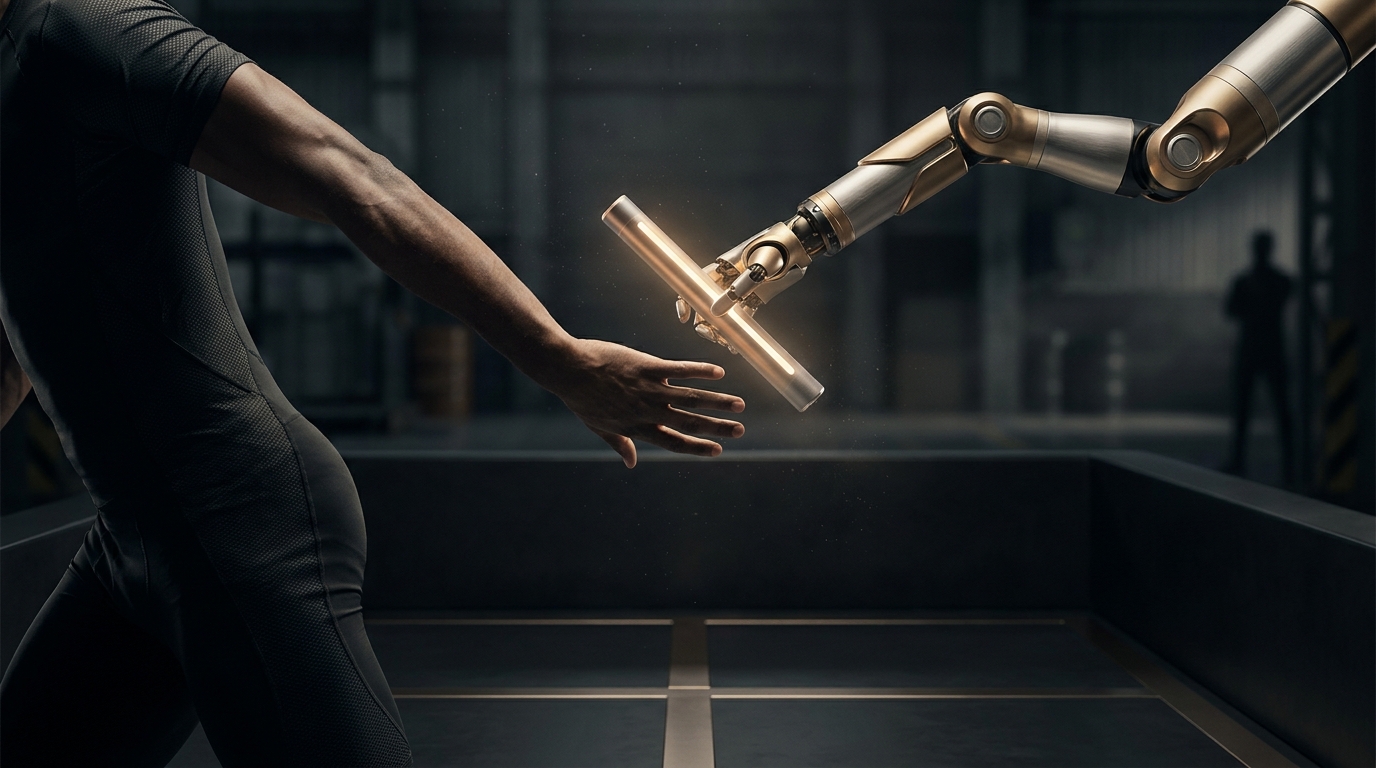
Watch a relay race and the medals aren't won in the sprint. They're won in the exchange zone, that small painted box where one runner reaches back without looking and another slaps the baton into their palm at full speed. Drop it there and the fastest legs in the world finish fourth. Your lead funnel works the same way. The runners matter, but the handoff is where you win or bleed.
Most operators think about lead response as a choice between two runners. Door one: full automation, the bot that answers everything and never sleeps. Door two: a human, warm and sharp and slow. The argument never ends because both sides are half right, and half right is a great way to lose deals you already paid for.
The number that ends the argument
A hybrid model, instant AI acknowledgment plus a human follow-up within five minutes, produces 34% higher conversion than either pure automation or pure human response (GreetNow, 2024). Not 3%. Thirty-four. That's the kind of gap that turns a break-even ad spend into a real business, and it comes from doing the obvious thing in the obvious order.
The order is the whole trick. AI takes the first leg because nothing beats it on speed. A lead fills out your form at 11:47pm and gets a reply before they've closed the tab. Not a generic "we got it," but a real first touch: confirms the address, asks the one qualifying question that matters, sets the expectation that a person is coming. Then the baton moves. A human picks up inside five minutes, already holding context the bot collected, and does the thing humans still do better than any model: read the room, hear the hesitation, close.
Pure automation drops the baton at the close. Pure human drops it at the start, because no person is answering at 11:47pm, and by morning your lead has filled out three more forms. The relay keeps both runners on the legs they actually run well.
This isn't experimental anymore
The reflex objection in real estate goes like this. "Isn't putting AI in front of a lead too risky?" Fair instinct. Wrong decade.
The market already moved. 67% of sales teams use some form of lead-response automation, 43% use AI qualification before a human handoff, and 38% run chatbots for first response (GreetNow). Read those again. The handoff model, AI qualifies, human closes, is the most common configuration on the list. The teams you're competing against for the same seller lead aren't debating whether to automate the first touch. They did it last year. The risk isn't using AI at the front door. It's being the only shop on the block where a human has to wake up to say hello.
And the risk people actually fear, the bot saying something dumb to a real prospect, is a design problem, not a reason to stay manual. The first leg is narrow on purpose. Acknowledge, confirm, qualify, hand off. You don't ask the robot to negotiate. You ask it to hold the lead's attention for the four minutes it takes a person to get there. That's a job it does flawlessly, every time, at 3am.
Why five minutes, and not fifteen
The five-minute window isn't a vibe. Lead interest decays like a struck match. The instant AI touch buys you time, but it doesn't freeze the clock, it just keeps the lead warm while your human laces up. Stretch the human leg to twenty minutes and you've handed your competitor the close, because the bot already told the lead a person was coming and then no person came. Now you've trained them to distrust you. A promise the relay can't keep is worse than no promise at all.
So the system has to be built as one motion, not two tools bolted together. The AI doesn't just reply. It routes, it flags the hot ones, it pings the human, it escalates if nobody grabs the baton in time. The exchange zone is engineered. That's the part nobody sees and the part that earns the 34%.
The shops winning right now aren't the ones with the smartest bot or the most charming closer. They're the ones who practiced the handoff until it's clean. Reach back without looking. Feel the baton hit your palm. Run.