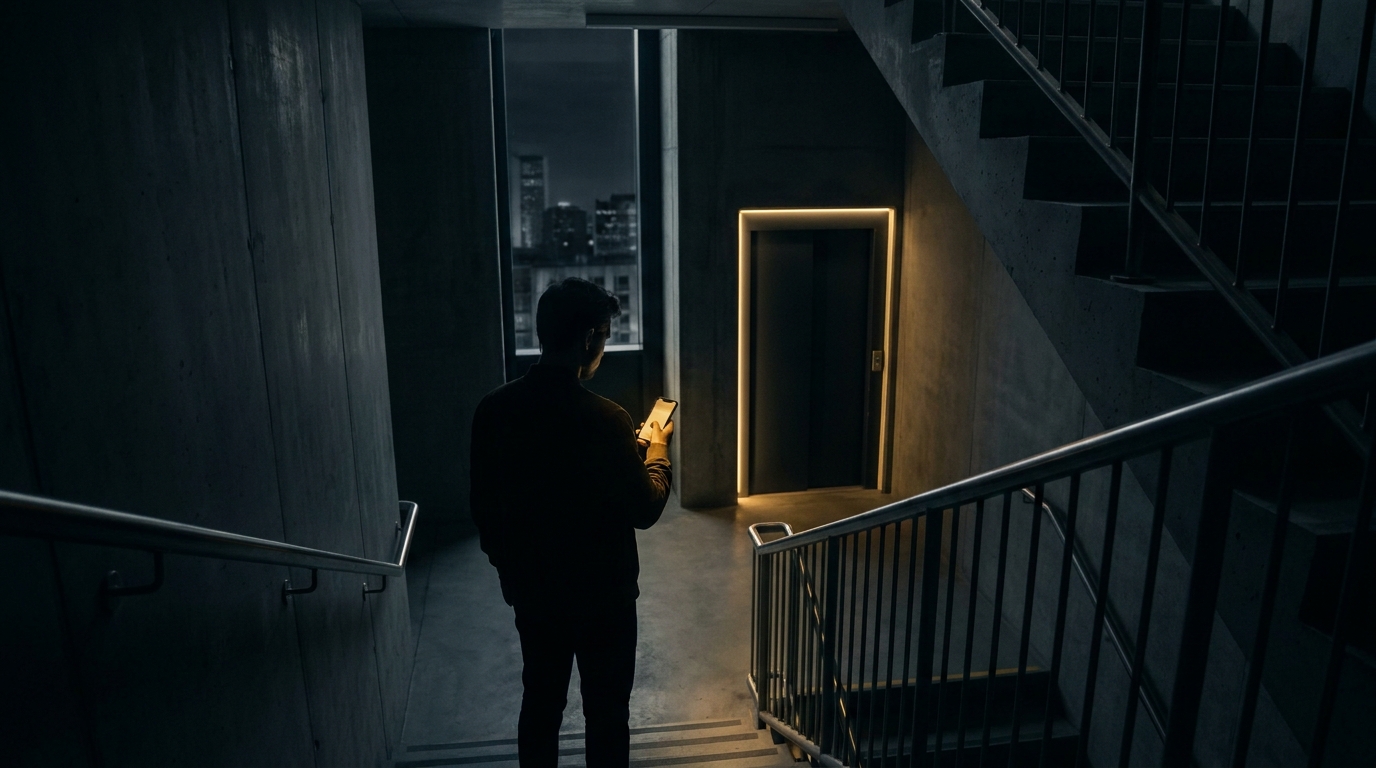
In Hospitality, After-Hours Is Always Showtime
It's 1:14 a.m. and a guest is standing in a dark stairwell in another time zone, thumbs hovering over the Airbnb app, typing "the door code isn't working." Nobody is awake to read it. The property manager is asleep, as property managers should be at 1:14 a.m. But the guest doesn't know that, and doesn't care, and is three minutes away from leaving the kind of review that follows a listing around for a year.
That's the job in short-term rentals. The lights in the office go off and the show keeps running.
Property managers know this rhythm in their bones, because tenant maintenance calls don't respect a 9-to-5 either. Hospitality is the same animal, just faster and louder. The guest cycle is days, not years. The feedback is public, scored, and permanent. And the volume is relentless in a way that surprises people who haven't lived inside an inbox of it.
The clock guests actually keep
Enso Connect pulled the numbers and they're brutal in their plainness: 75% of messages to Airbnb hosts come in outside traditional business hours (Enso Connect, 2025). Three out of four. The busiest stretch of your communication day happens while you're not having a day at all.
And these guests are not patient. On SMS and WhatsApp, a guest expects a reply in about a minute and reads anything longer as a snub. The actual industry average for short-term rental hosts on those channels is nine minutes (Enso Connect, 2025), with frustration setting in hard past the twelve-minute mark. On live chat the expectation is sharper still: 48 seconds before a guest starts wondering if anyone's home (Enso Connect, 2025).
Guesty looked at a thousand real guest conversations and clocked the same gap from the other side. SMS and iMessage averaged an eight-minute first response at a 93% response rate. Onsite chat: seventeen minutes, and a response rate that cratered to 46% (Guesty, 2025). Half the people who reached out through the chat box on a property's own site got nothing back.
Slow replies don't just annoy. Across every customer-service sector measured, slow response time ranks as the number-one complaint (Enso Connect, 2025). In hospitality that complaint has a scoreboard attached.
Speed is the booking
Here's where the after-hours problem stops being a service story and becomes a revenue story.
Properties that respond within an hour pull 25% more instant bookings (Enso Connect, 2025). Same listing, same photos, same price. The only variable is whether someone answered fast. Push a listing's response rate from below 89% up to 100% and bookings can climb as much as 116% (Enso Connect, 2025). The inquiry that goes unanswered at midnight is no deferred sale. It's a guest who already booked the place down the street before you woke up.
And it compounds. Airbnb and Vrbo bake response speed into their ranking algorithms, so the operator who's slow at 1 a.m. doesn't just lose that guest. They sink in search for the next guest too. The penalty is silent and it's daily.
The mercy: most of it is the same five questions
Now the good news, and it's genuinely good. The flood is repetitive.
A single Airbnb or Vrbo booking generates somewhere between 15 and 25 messages across its life, from the first "is it available?" to the eventual "we left a phone charger, can you mail it back?" Five of those questions, check-in instructions, the WiFi password, early check-in, parking, late checkout, account for roughly 80% of every inbound message a portfolio sees. Roughly 80% of guest communication is predictable and repeatable enough to automate cleanly.
This is the part operators feel in their gut before they ever see the math. You're not answering hard questions at 1 a.m. You're answering the WiFi password. Again. The thing eating your nights and your reviews is volume, not complexity: a handful of questions a sticky note could answer, except the sticky note can't talk back at 1:14 a.m.
That's the whole case for putting AI on the front door. Hand the five questions to a system that's awake when you're not, that replies in seconds on SMS and chat, that knows the door code and the parking situation and the checkout time cold. Route the genuine exceptions, the broken lock, the double-booking, the upset guest, to a human, with the full thread logged so nobody starts from zero. The guest in the dark stairwell gets an answer before the bad review forms. You get your nights back.
The math is almost rude in its simplicity. Most of the messages are the same. Most of them arrive when you're closed. And the operators who answer them fast win 25% more bookings while everyone else sleeps through the inquiry.
In this business the curtain never comes down. The only question is whether anyone's on stage when the guest walks in.